Spray Polyurea vs. Roll-On Coatings vs. a New Membrane
Three ways to deal with a tired RV roof, compared side by side — seams, strength, flexibility, downtime and long-term upkeep.
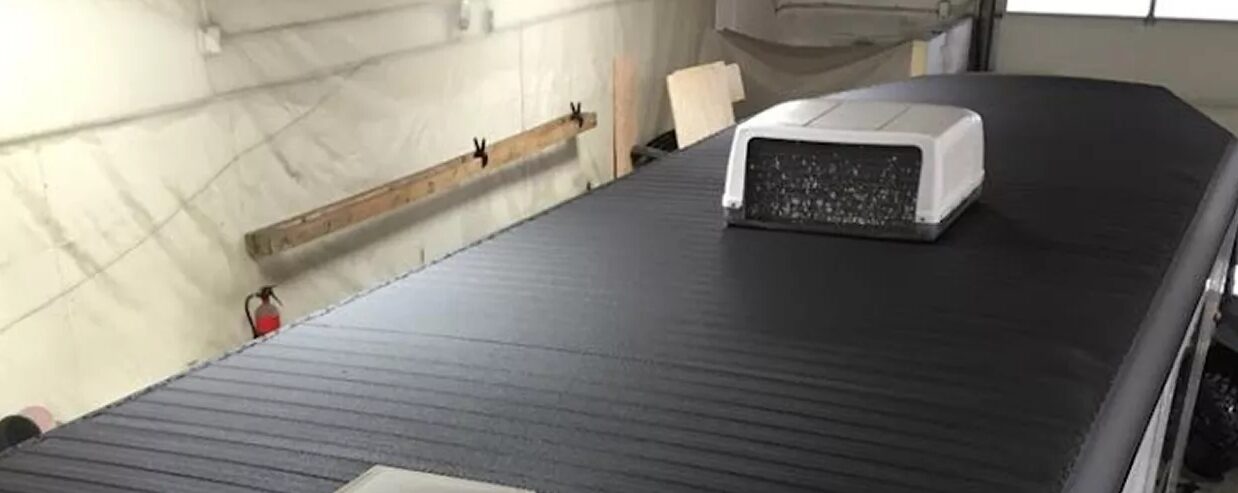
When an RV roof starts leaking, owners usually land on one of three options: roll on a coating themselves, replace the membrane, or have a professional spray a polyurea roof. Each has its place. Here’s how they compare on the things that actually decide whether you’re back on the roof next year.
Option 1: Roll-on or brush-on coatings
Liquid roof coatings — often acrylic or elastomeric — are the DIY favorite. They’re inexpensive and you can apply them with a roller over a weekend.
The trade-off is thickness and strength. A rolled coating is a relatively thin film. ArmorThane points out that typical acrylic roof coatings have tensile strength in the range of a couple hundred psi. On a roof that flexes constantly, thin films can crack over time, and they usually need periodic re-coating. Multiple coats with dry time in between also add up.
Option 2: Membrane replacement
Tearing off and replacing an EPDM or TPO membrane gives you a fresh sheet — but it brings back the same design that leaked in the first place. The new roof still has laps, edges and penetrations held closed by lap sealant, and that sealant still needs regular inspection and touch-ups.
Replacement is also the most invasive option: tear-off, deck repair, new membrane, new edge trim and reinstalling every fixture.
Option 3: ArmorThane spray polyurea
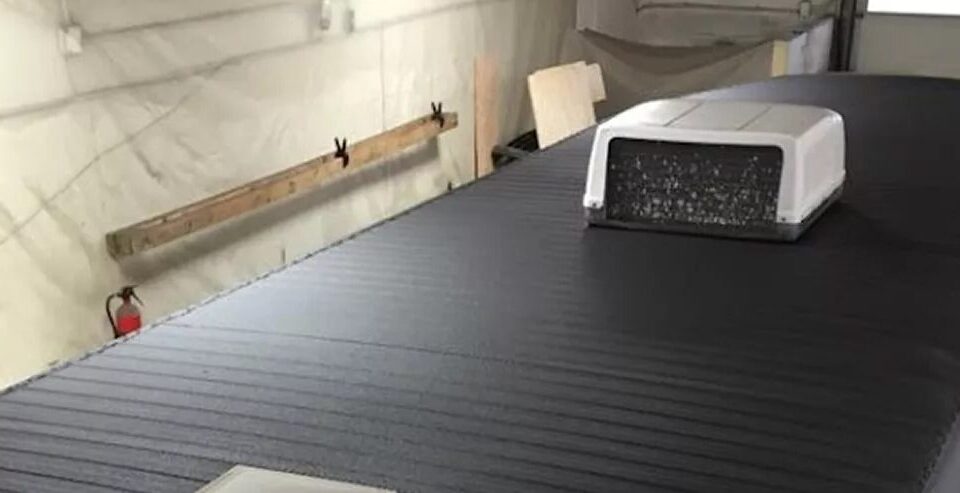
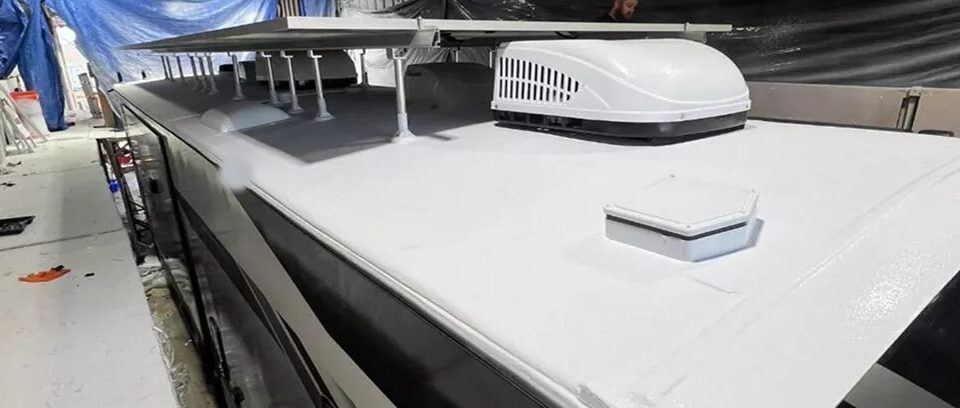
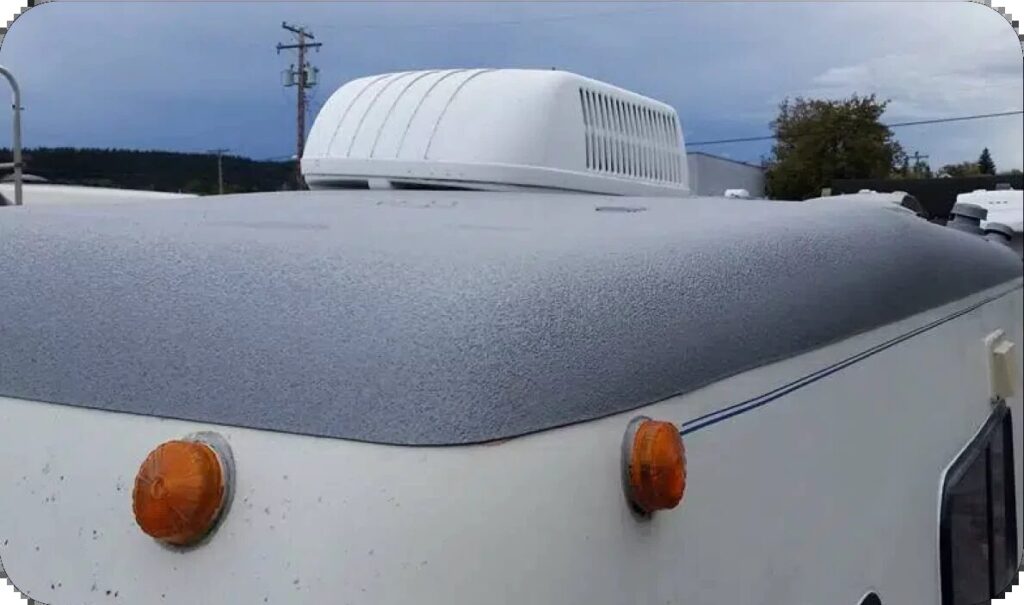
A professional applicator preps and primes the roof, then sprays a heated, plural-component polyurea that forms one monolithic membrane across the whole roof. There are no seams to separate. ArmorThane cites tensile strength in the several-thousand-psi range for spray polyurea — far beyond typical acrylics — and the membrane stretches several hundred percent before breaking.
Time on site is typically one to two days, the material is tack-free in about an hour, and ArmorThane cites an expected service life of 20+ years for a properly applied system.
Side by side
| Spray polyurea | Roll-on coating | New membrane | |
|---|---|---|---|
| Seams | None | None, thin film | Laps sealed with sealant |
| Strength | Thousands of psi* | ~A couple hundred psi* | Depends on sheet |
| Flex | Several hundred % elongation | Can crack with movement | Sheet flexes; seams are weak point |
| Time on site | 1–2 days | Multiple coats + dry time | Tear-off and re-install |
| Upkeep | Annual inspection | Periodic re-coats | Re-seal laps and fixtures |
What about cost?
Up front, a roll-on coating is the cheapest. ArmorThane cites typical spray polyurea quotes of roughly $3,500–$7,000 for a 30-foot RV, depending on size and condition. The real comparison is over time: how many re-coats, re-seals and leak repairs you avoid. ArmorThane estimates the spray option pays for itself versus traditional maintenance over roughly a decade.
The bottom line
- Choose a roll-on if you need an inexpensive stopgap and don’t mind re-coating.
- Choose replacement if you want a factory-style membrane and are comfortable maintaining its seams.
- Choose spray polyurea if you want to stop maintaining seams altogether.
Curious what that process looks like on a real roof? Read our project walk-through.
Want to spray RV roofs for a living?
$0 franchise fee. 0% royalties. Training, certification and a 24/7 tech line from ArmorThane.