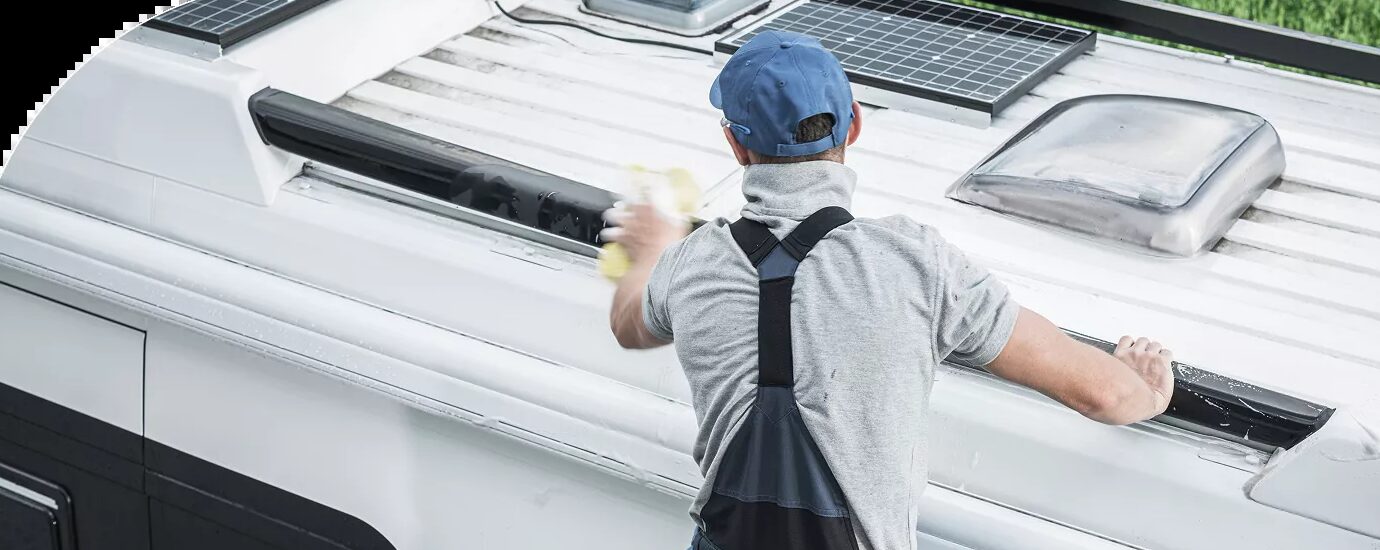
01Inspect & map the roof
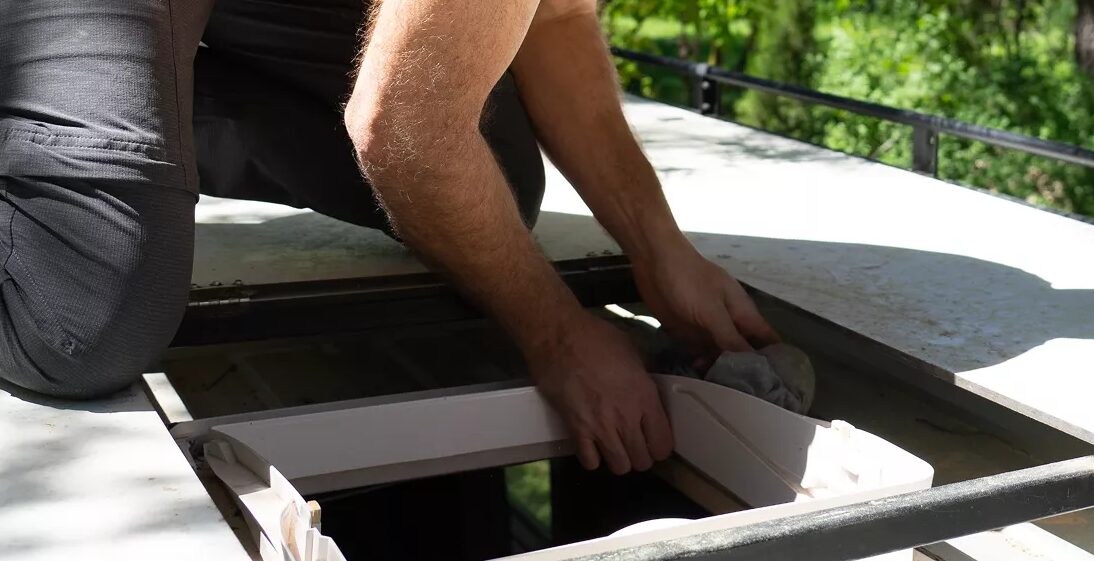
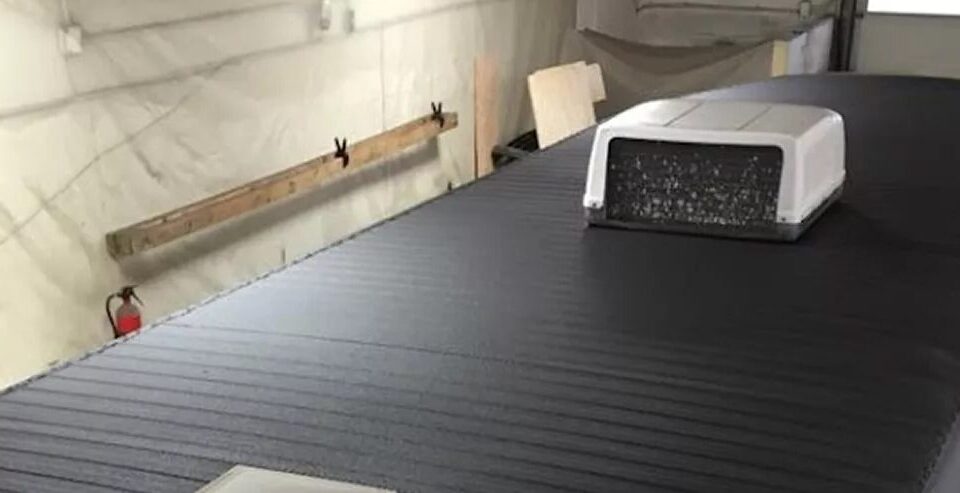
Every vent, seam, AC shroud, skylight and soft spot gets mapped. Water-damaged decking is cut out and replaced first — polyurea seals whatever is underneath it, so the deck has to be sound and dry.
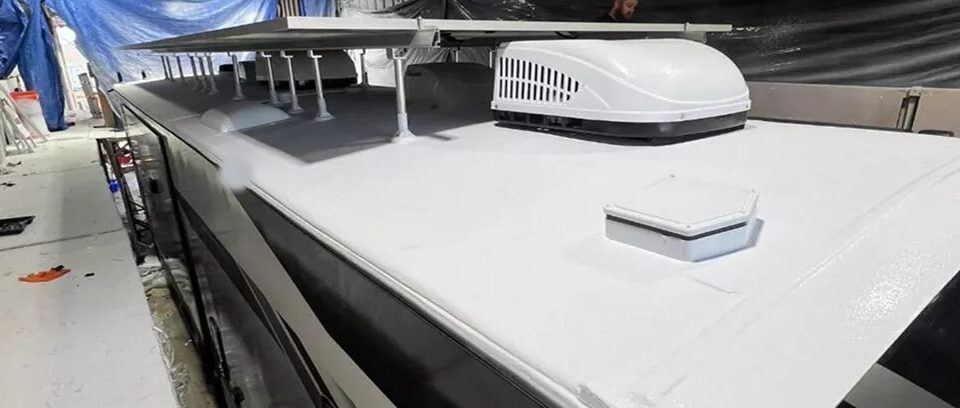
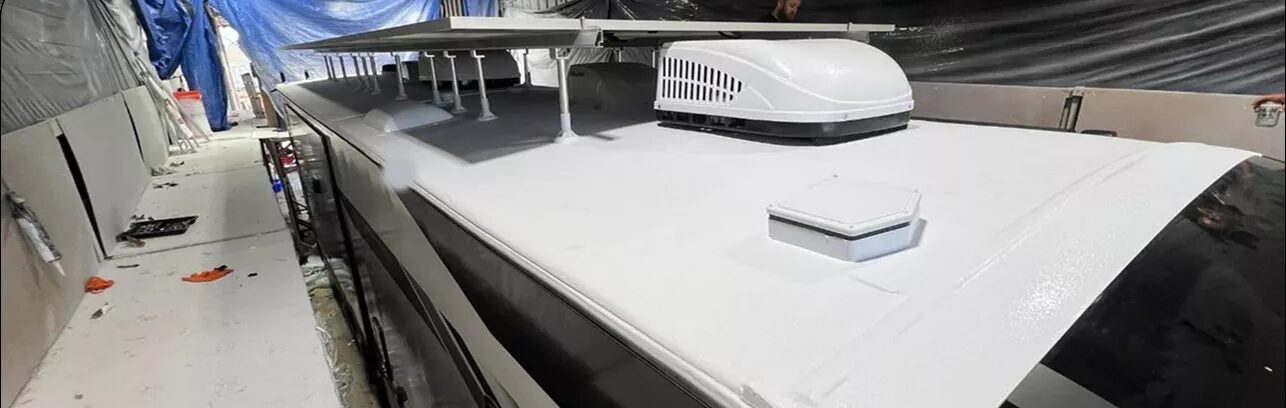
Traditional RV roofs are pieced together and held by sealant. The ArmorThane method sprays a single polyurea membrane over the entire roof — so there are no laps, flanges or seams left to fail.

Most of the work happens before the gun is ever pulled. That's the point.
01Every vent, seam, AC shroud, skylight and soft spot gets mapped. Water-damaged decking is cut out and replaced first — polyurea seals whatever is underneath it, so the deck has to be sound and dry.
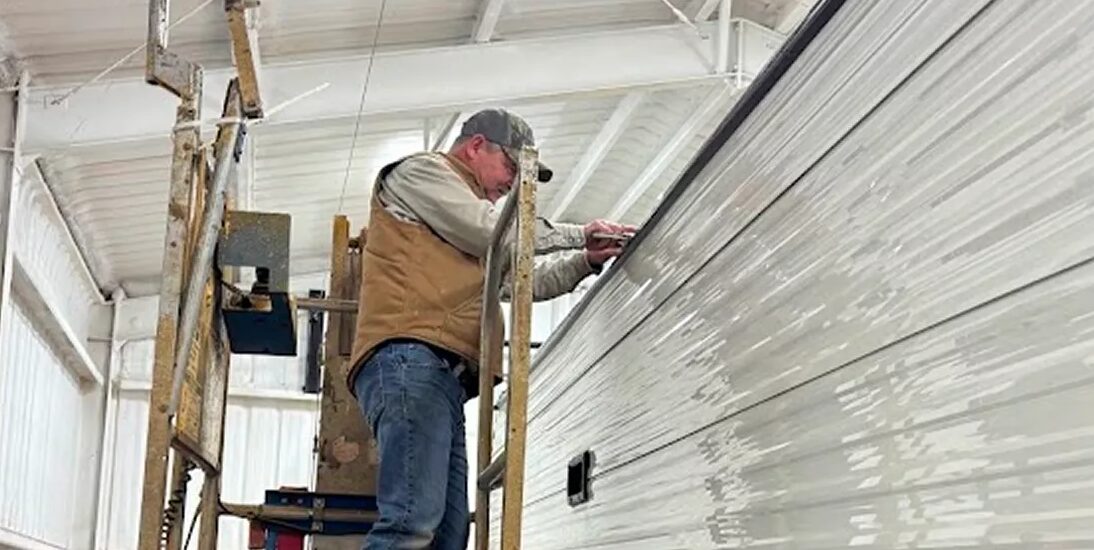
02Failed lap sealant and loose membrane are removed, the surface is cleaned and scuffed, and sidewalls, windows and fixtures are masked. Rubber roofs like EPDM are low-surface-energy substrates, so they get substrate-specific prep.
03A bonding primer matched to the roof material is applied so the membrane locks to the substrate. ArmorThane treats prep and primer as critical — moisture or contamination left behind is what causes blisters later.
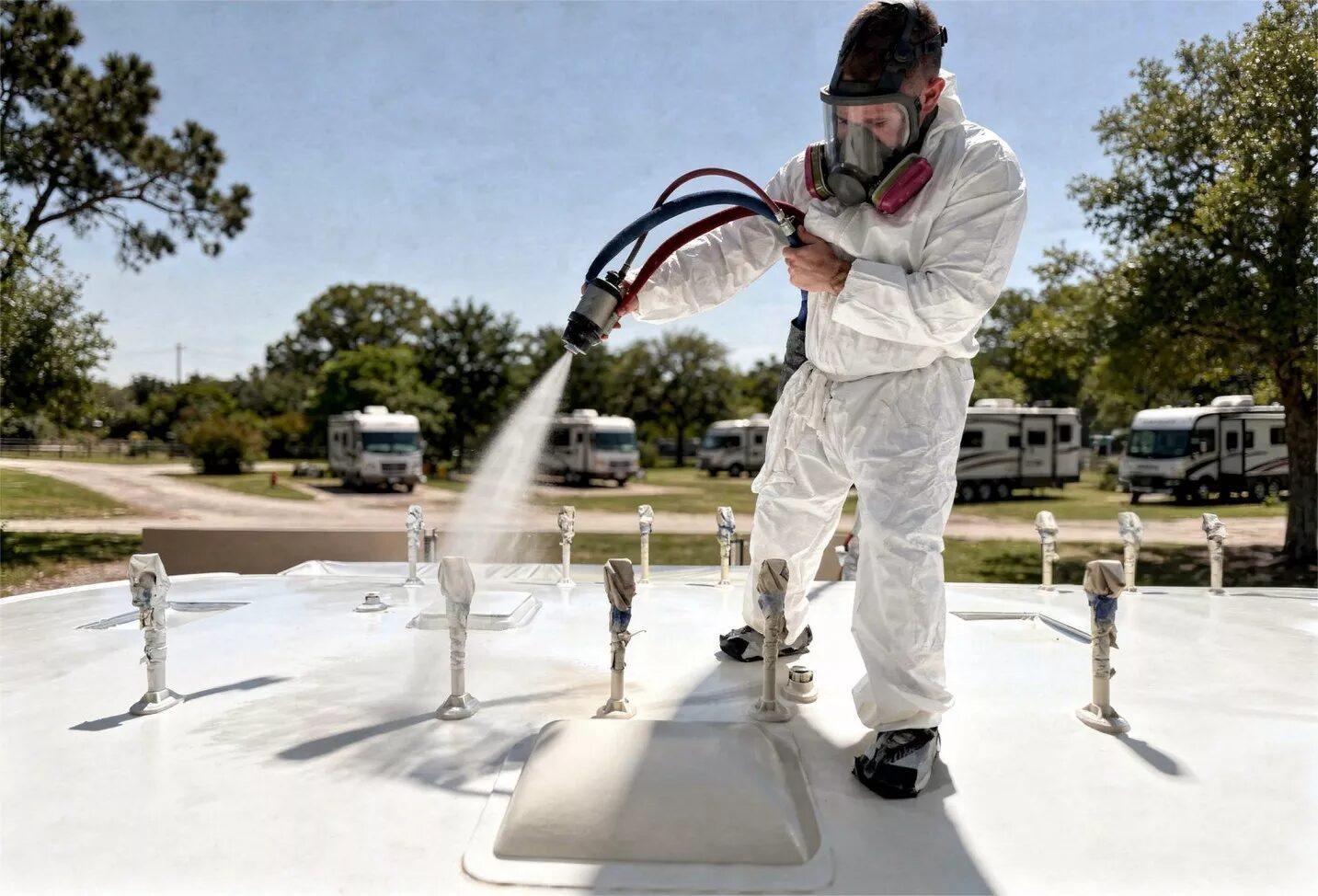
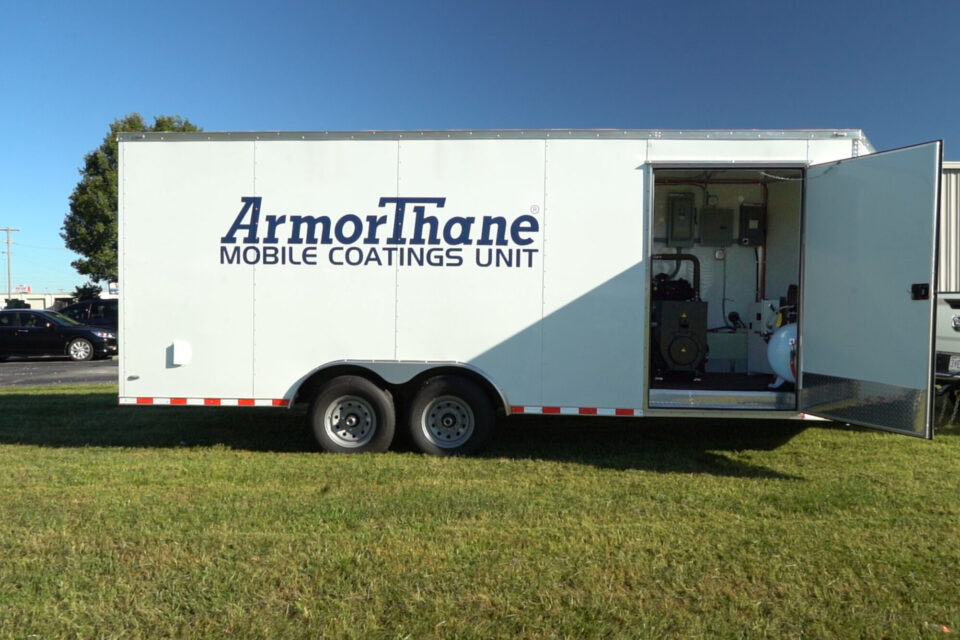
04Heated, plural-component equipment sprays polyurea at roughly 2,000–3,000 psi with material at 150–160°F. It wraps edges, vents and fixtures in a single monolithic membrane that stretches several hundred percent before it breaks, and is tack-free in about an hour.
05A UV-stable topcoat goes over the base membrane to protect it from sun exposure. Fixtures are reinstalled, the roof gets a final inspection, and most RVs are back on the road after one to two days on site.
Hover or tap a layer to see what it does.
A 1:1 polyurea with an aluminized finish that reflects light, stays flexible and waterproofs — built by ArmorThane as an underlayment and custom-fit replacement roof for RVs, trailers and houseboats.
How the ArmorThane method stacks up against the two most common alternatives.
Swipe to compare
| Feature | Best overallArmorThane spray polyurea★★★★★ | Roll-on / brush coatings★★★★★ | Membrane replacement★★★★★ |
|---|---|---|---|
| Seams on the finished roof | None — one monolithic membrane | No seams, but a thin film | Laps and seams held by lap sealant |
| Strength | Tensile strength in the thousands of psi* | A couple hundred psi for typical acrylics* | Depends on the sheet installed |
| Flexes with the road | Stretches several hundred percent | Thin films can crack with movement | Sheet flexes; sealed seams are the weak point |
| Time on site | 1–2 days; tack-free in ~1 hour | Multiple coats with dry time between | Tear-off and full re-install |
| Ongoing upkeep | Annual inspection | Periodic re-coats | Re-seal laps and fixtures regularly |
| Expected service life | 20+ years expected* | Short re-coat cycles | Varies with membrane and upkeep |
*Figures as cited by ArmorThane. Our ratings are editorial and reflect the roof's long-term resistance to leaks.

No franchise fee. No royalties. Hands-on training, certification and a 24/7 tech line behind every job you spray.